Auracast™ and the Future of Audio Streaming for Hearing Aids

For many people with hearing loss, navigating through public spaces often means missing out on everyday moments that most of us take for granted.


Imagine this…


You’re standing in a crowded airport, straining to hear a gate change announcement over the roar of the terminal.


Or perhaps, you are at a sports bar, trying to enjoy a game with your friend, but you’re left feeling isolated because you can’t actually hear the commentary coming from the TV.


This can leave a person feeling disempowered, discouraged, and even hopeless. Technology, however, is constantly advancing, and there’s a new piece of equipment that is starting to hit the market and make a real difference in people's lives. 


It’s name, is Auracast™.


We’re going to explain what Auracast™ is, how it works, and how it will change the future of audio streaming for hearing aid users. Audiology First has always been a leader for the latest tech in hearing aid investments, and we’re excited to help our patients navigate these new opportunities.


What is Auracast™ Broadcast Audio?

Auracast™ is a new Bluetooth® capability that allows a single transmitter (such as a television, your smartphone, or even a public announcement system) to broadcast high-quality audio to an unlimited number of nearby receivers. This will include compatible hearing aids, earbuds, and headphones.


An easy way to conceptualize this is like your very own personal radio station. In your car, you can tune the radio into a specific frequency carrying a specific channel. Auracast™ allows you to “tune in” in a similar way; specific audio streams available in a public venue, directly to your hearing device.


This technology is built upon the advanced Bluetooth LE Audio standard, which provides better sound quality with significantly lower battery consumption.


How is Auracast™ Different from Current Systems?

Public venues currently use Assistive Listening Systems (ALS). Examples of these include hearing loops (telecoils), FM systems, or infrared systems to help those with hearing loss. They’ve been helpful, but they have their limitations. Some of which Auracast™ has been designed to overcome.


Nick Hunn, a physicist, engineer, and wireless technology specialist is uniquely positioned to address some of these barriers. 


As the Chief Technology Officer of WiFore (a wireless technology analysis and design firm), and a key contributor to the technological foundation of Auracast™, he has been a driving force in the development of the Bluetooth® LE Audio standards that are now making this vision of inclusive audio a reality.


“While current assistive listening systems, such as inductive loops, have been providing great benefit to people with hearing loss, they suffer from a number of challenges that have limited their deployment, including poor quality, high cost, and lack of privacy.” —Nick Hunn, CTO of WiFore


One of the most significant shifts is the removal of “equipment stigma”; users will no longer have to borrow bulky, specialized receivers from the public spaces. The introduction of a BYOD (bring your own device) model will help people with hearing loss to maintain autonomy and comfort, without feeling singled out, among the public.


Here is a simple table to outline some of the key differences between traditional systems and Auracast™ broadcast audio:

Feature Traditional Systems (Loops/FM) Auracast™ Broadcast Audio
Equipment Often requires borrowing a venue receiver Uses your own personal hearing aids or earbuds
Audio Quality Can be prone to interference or lower fidelity High-quality, digital Bluetooth LE Audio
Privacy Public broadcasts can sometimes be "overheard" Supports both open and encrypted broadcasts
Scalability Can be expensive and complex to install Lower cost and easier for venues to deploy

Unlocking Audio in Airports, Theaters, and Beyond

There are so many potential applications, scenarios, and environments that Auracast™ is slated to revolutionize for people with hearing loss:

  • Airports: Tune into gate announcements or the audio of a specific news channel playing at your gate.
  • Theaters & Conferences: Receive crystal-clear audio directly from the presenter’s microphone; you could even choose a dedicated channel for real-time language translation.
  • Gyms & Waiting Rooms: Listen to the audio from any of the muted TVs on the wall without disrupting others.
  • Museums: Access guided tour audio directly through your hearing aids without needing a separate headset.


While these are just a few examples, there’s really no limit to its future development, application, and capacity.


When Can I Expect Auracast™?

The future is closer than you think. While widespread adoption may take some time (experts estimate it could be anywhere from 2 to 10 years for global Auracast-compatibility), some of the latest hearing aids, like Oticon Intent and Zeal models, already come equipped with Auracast™-ready hardware. 


Global standards for the technology and its use are projected to be fully-established by late 2027.


What You Can Do Now:

  1. Talk to your audiologist: Our team at Audiology First works hard to stay at the forefront of the industry, and we can help you determine if your current lifestyle would benefit from this exciting new technology.
  2. Consider “Dual-Tech” devices: For people who have significant hearing loss, it’s recommended they look into hearing aids that offer both traditional, telecoil systems, as well as Auracast™. This allows such individuals to access both systems; ready for today, prepared for the technology of tomorrow.


Check your phone: Ask your provider if your current smartphone is compatible with the Bluetooth LE Audio standard required for Auracast™.

Curious if new hearing aid technology like Auracast™ is right for you? The world of hearing technology is advancing quickly, and the expert team at Audiology First is here to help you navigate it.


Contact Audiology First today to book a consultation. We’ll help you understand your options and find the best solution for your unique hearing needs and lifestyle!

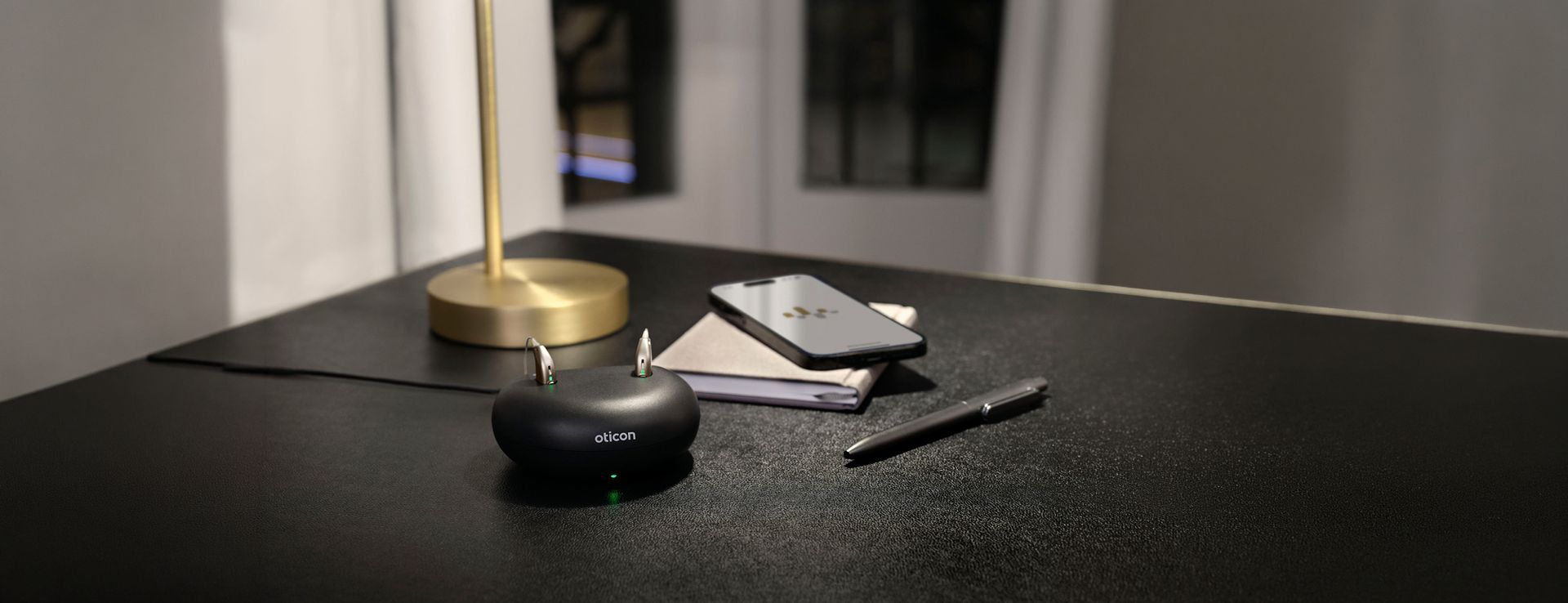
Oticon hearing aids charging in a wireless charger on a desk beside a smartphone
February 27, 2026
Discover how AI-powered hearing aids are transforming sound quality, health monitoring, and personalization. Learn what's new in 2026.
Person outdoors, wearing earbuds, holding phone, blue shirt, looking upward.
January 30, 2026
Learn how earbuds cause permanent hearing damage. Discover 5 safe listening tips including the 60/60 rule and warning signs to protect your hearing.
Audiologist consulting with patient about hearing aids in professional office setting
December 23, 2025
Our guide helps you choose the best hearing aids in Canada. Learn about styles, features, costs, and funding to find the perfect match for your lifestyle and budget.
Woman undergoing comprehensive hearing test with audiologist in soundproof booth wearing headphones.
November 28, 2025
Discover how regular hearing tests, including speech-in-noise testing, prevent long-term hearing damage. Expert audiological care from Audiology First.
Mature couple conversing confidently in noisy restaurant with Oticon hearing aids
October 31, 2025
Learn how hearing loss leads to social isolation and proven strategies to stay connected. Expert communication tips, treatment options & support in Lethbridge.
October 3, 2025
When it comes to audiology, there’s only one true emergency: sudden sensorineural hearing loss (SSNHL) . Unlike gradual hearing loss that develops over years, SSNHL appears abruptly and requires immediate medical attention. Audiology First specializes in rapid emergency hearing care, with diagnostic protocols and treatment pathways designed to act fast when every hour matters. Quick intervention can mean the difference between full recovery and permanent hearing damage. Let’s learn how to recognize warning signs and understand what a treatment plan would look like. Understanding Sudden Sensorineural Hearing Loss Definition and Criteria To an Audiologist, sudden sensorineural hearing loss is defined as a 30+ dB hearing loss (which in layman's terms would be a very noticeable change) across three different pitches of hearing within 72 hours. For it to be a true sudden sensorineural loss, it cannot be related to anything else, like wax blockage, fluid buildup or a blockage. It happens without warning and is often mistaken for a minor issue like earwax buildup or fluid in the ear, but the stakes are often much higher. Prevalence and Demographics SSNHL affects about 5 to 20 per 100,000 people annually , with thousands of cases reported across Canada. While it can strike at any age, adults in their 40s and 50s are more commonly affected. Unilateral vs. Bilateral Most cases are unilateral (one ear), but in rare circumstances, hearing loss can affect both ears. Bilateral cases are especially urgent and may point to underlying systemic or autoimmune conditions. Associated Symptoms Patients often experience additional warning signs such as tinnitus (ringing in the ears), dizziness, or a sensation of fullness in the affected ear. Audiology First’s Emergency Assessment Our clinic prioritizes same-day evaluations , including audiometric testing and immediate physician referral when needed. By identifying SSNHL quickly, we aim to maximize the window for effective treatment and recovery. Remember that hearing care centers like Audiology First cannot treat sudden loss, but play a role in identifying it. If you cannot see an audiologist or another trained hearing care professional right away, you should not delay seeking medical help from a physician. If same day testing is not available, you should continue to seek help as a matter of urgency. We recommend using one or more of the following resources: Call Alberta Healthlink on 311 Visit an Urgent Care center Visit your local Emergency Room or Call a local Ear Nose and Throat specialist’s office Recognizing the Warning Signs  Immediate Symptoms The hallmark sign is sudden hearing loss in one ear , which may feel like muffled sounds or difficulty understanding speech. Secondary Indicators Other red flags include persistent tinnitus, balance issues, and ear pressure that can accompany the hearing loss. When to Seek Emergency Care Time is of the essence. Some research shows that treatment is most effective when started within the first 72 hours . While some people’s hearing may recover spontaneously with or without treatment, delaying medical attention can lead to permanent hearing impairment . In some cases, hearing does not recover, even with prompt treatment. If you are experiencing dizziness at the same time as a hearing loss, do not drive yourself to seek help, but consider getting someone to drive you to any immediate appointments. Self-Assessment Techniques At home, a simple test is to cover one ear at a time when listening to a familiar sound (such as your phone or TV). If one side sounds significantly quieter or distorted, it’s an urgent signal to seek help. If you are a hearing aid user, it is important to check that your hearing aid is not blocked or malfunctioning in some way, giving the appearance of a sudden change in hearing. Treatment Options and Protocols Audiologists and Hearing Care Professionals cannot prescribe medications, but these are some of the options offered to people with sudden loss when they visit a medical professional. Corticosteroid Therapy The primary treatment for SSNHL is corticosteroids, delivered either orally or through intratympanic injections. These reduce inflammation and improve the likelihood of hearing recovery. Prednisone is often prescribed. Treatment Timing Prompt treatment is crucial. Patients who start therapy within 14 days of onset have significantly better outcomes. Hyperbaric Oxygen Therapy For patients who don’t respond to steroids, hyperbaric oxygen therapy can serve as a salvage treatment, improving oxygen delivery to the inner ear. Supportive Care Managing related issues like tinnitus or dizziness may require additional therapies, including hearing aids or vestibular rehabilitation. Audiology First’s Treatment Approach We have a great relationship with the local ENT specialists, and coordinate all aspects of care with them to ensure each patient has access to the best possible recovery options. Recovery and Rehabilitation Recovery Timelines: Recovery can range from a few days to several months, depending on the severity and speed of treatment. Some patients regain full hearing, while others experience only partial improvement. Hearing Aid Considerations: For those with lasting deficits, modern hearing aids can provide amplification and restore communication confidence. Tinnitus Management: Persistent ringing in the ears is often a consequence of hearing loss that can be managed through sound therapy, well fitted hearing aids, counseling, and tinnitus retraining techniques. Follow-up Care: You should return to the clinic for a series of routine follow up tests over the weeks and months following a sudden hearing loss. This allows us to measure whether treatments have been successful, and to treat any residual hearing loss. Audiology First’s Rehabilitation Services For those who need it, Our team provides comprehensive recovery support, including custom hearing aid fittings, counseling, and personalized rehabilitation plans. Prevention and Risk Factors Known Risk Factors Sudden Sensorineural Hearing Loss has been linked to the following: Viral infections Autoimmune disorders Circulatory problems Certain medications Age-related vulnerabilities Protective Measures Protecting your hearing from loud noise, avoiding ototoxic medications when possible, and treating systemic health issues can lower risk. Early Detection Baseline hearing tests and regular audiology check-ups can help detect changes early and establish a benchmark for comparison. Lifestyle Factors It is difficult to note which factors may reduce the risk of sudden sensorineural hearing loss, but a healthy lifestyle—including balanced nutrition, exercise, and cardiovascular health—supports long-term hearing preservation. Audiology First’s Prevention Programs We provide preventive screenings, personalized risk assessments, and educational resources so patients can take proactive steps toward protecting their hearing health. Sudden Sensorineural Hearing Loss is not a typical hearing problem…it’s a medical emergency. If you or someone you know experiences sudden hearing loss, don’t wait, contact Audiology First immediately during business hours, or contact any other trusted hearing care clinic. If you cannot reach us, please seek immediate medical attention. Book your hearing evaluation today and take the first proactive step in protecting your long-term hearing health.
September 2, 2025
Compare disposable and custom ear plugs with expert guidance from Canadian audiologists. Find the perfect hearing protection for your lifestyle and needs.
Detailed human ear anatomy model held by audiologist at Audiology First clinic.
August 15, 2025
Confused about hearing loss healthcare providers? Learn when to see an audiologist, ENT, or family doctor. Free hearing tests in Lethbridge, Alberta.
Woman holding a modern hearing aid, showcasing advanced hearing solutions from Audiology First.
July 3, 2025
Keep your hearing aids optimal! Discover essential maintenance tips: daily care, cleaning techniques, and professional support for clear sound & longevity.
Assorted hearing protection including earmuffs and earplugs used for workplace noise reduction.
June 2, 2025
Everyday noise—whether from traffic, power tools, or concerts—can damage your hearing over time. That’s why understanding noise reduction ratings (NRR) is key to choosing the right protection.